April 29, 2013

Sarah, Advocate for Women's Education


Gracious God, we bless your Name for the vision and witness of Sarah Hale, whose advocacy for the ministry of women helped to support the deaconess movement. Make us grateful for your many blessings, that we may come closer to Christ in our own families; through Jesus Christ our Savior, who lives and reigns with you and the Holy Spirit, one God, for ever and ever. Amen.  

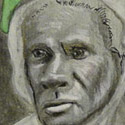
Sarah Josepha Buell Hale (f.d. April 30) accomplished many things in her long life, though her short children's poem, "Mary's Lamb," is likely better known than her many other ventures, including long editorship of Godey's Ladies' Book, her advocacy for women's education and role in founding Vassar, and her lobbying for the creation of a national holiday for Thanksgiving. She was a tough New Hampshire woman with an indomitable spirit.

The image is a quick icon in watercolor pencil, a technique I am much enjoying exploring of late.

Tobias Stanislas Haller BSG

April 25, 2013

More Flawed Reasoning from Expert

A Roman Catholic priest and professor has launched another assault on marriage equality. Fr Rhonheimer claims that marriage equality actually imposes a burden upon, or discriminates against mixed-sex marriages.

Conferring legal equality to same-sex unions signifies to publicly establish, in the law system, the principle of dissociation of sexuality and procreation... Besides containing an erroneous moral message, it actually means to objectively discriminate against married people, who intentionally have engaged in a union ordered towards the task of the transmission of human life, accepting all the burdens and responsibilities of this task.
As is so often the case with arguments from the procreationist side of the reality divide, this fails to recognize that the "burdens and responsibilities" of procreation do not fall upon all mixed sex couples, however "ordered" their union might be. Moreover, all citizens bear some of the burden of supporting other people's children. So even the unmarried, dare I mention even the celibate, or those married but without children, share in the burdens and responsibilities placed upon them by those who do bear children — some of whom actually become wards of the state because of the inadequacies or misfortunes of their biological parents. So if anything, those who procreate discriminate against those who don't.

If anything is "erroneous" it is Father Rhonheimer.

Tobias Stanislas Haller BSG

April 21, 2013

Childlike Maturity

April 20 2013 • St John’s Tuckahoe
for the Rev. Kristin Kopren’s Institution
Tobias Stanislas Haller BSG


We must no longer be children, tossed to and fro and blown about by every wind of doctrine... +

We are gathered here today to celebrate and recognize a ministry that is already under way. My classmate and colleague Kristin has been ministering here at Saint John’s for a while now, so today’s celebration has to seen as a continuation rather than an inauguration. And this is good, as it reminds us that ministry is not a one-shot deal, but a work for the long term.

It is also a reminder that the inauguration of a ministry, like ordination itself, does not instantly equip a priest with all of the skills and talents that will be called upon for ministry — would that it did! Those skills and talents have to be developed over the years, and that process begins even before entering into the concentrated work in seminary, and continues in ministry afterwards. I am happy to have shared three years with Kristin in the hothouse seed-bed of the General Theological Seminary, as well as numerous breakfasts at the local diner with other classmates as we debriefed from our class in systematic theology. I know that all of us learned a great deal while in seminary, though less about plumbing and boilers and masonry work than we would be called upon to employ! I have long thought that the General Ordination Examination ought to include at least one question such as: “A Vestry meeting has just adjourned, when the Senior Warden informs you that the cistern on the commode in the women’s lavatory won’t stop running, even though she has jiggled the lever three times. In an essay of at least 500 words, discuss this incident in relation to the canonical duties of clergy and lay leaders respectively, in relation to the portrayal of the priestly office in the Epistle to the Hebrews, particularly as to calling the plumber.”

Graduation and ordination do not suddenly equip a minister with all that will be needed to carry out that ministry. One learns a great deal in relatively short order — not only the harsh realities of building maintenance, but the challenges of pastoral care. It is not only a plentiful harvest into which the Lord sends these laborers, but one that will require some very hard and intensive work, the proper tools, and above all cooperation and support from many co-workers, including the bishop, the other clergy, and most importantly the leaders and members of the parish — who are far from harassed and helpless, nor to be regarded as sheep, but as members of the body that builds itself up in cooperative and loving work. And it is through this process of loving one another and working together that all will hope to grow into the full stature of Christ, to full maturity, no longer children, tossed to and fro and blown about by every wind of doctrine.

+ + +

I cannot help but note, however, that there is some tension between Saint Paul’s urging the Ephesians to get with the program and grow up, and that powerful story of the young Samuel in our first reading. For in that account it is not the mature, indeed the decrepit, Eli who hears and understands the voice of God. It is the child, the child who hears and responds to the Lord each time he is called, and by his persistence finally gets old Eli to understand, as a former president once said, “that the torch has been passed to a new generation.”

This moving passage should remind us, the Epistle to the Ephesians notwithstanding, that the Scripture often testifies to the consistent favor God shows to, and the responsibility God places upon, the younger as opposed to the elder: from Cain and Abel, through Esau and Jacob, to David the youngest of Jesse’s passel of sons, to John the Baptist and his cousin Jesus— he who put the message in no uncertain terms when he reminded us that any who wish to come to the kingdom of heaven must do so as a child, and as John’s Gospel has it, as one born again, from above.

I will echo Nicodemus and ask, How does one grow to maturity while maintaining the childlike attitude of those born anew? I need perhaps not note the difference between being childish and being childlike. The important thing seems to be maintaining the child’s openness to possibilities even as one grows to maturity. We can take old Eli as a sad example of what happens when one forsakes childlike delight in what is always new, for false and self-satisfied maturity, the complacency of having arrived. While tolerating the wickedness of his sons who cheat the people of their sacrifices, Eli has grown physically blind and fat, and spiritually hard of hearing. The word of God was rare in those days — not for want of God speaking, but for want of ears to hear. How many times has the Lord’s voice spoken in the stillness of the night and Eli has ignored it, dismissing it, as others would later do when God spoke in distant thunder: Eli, Eli, why have you forsaken me?

No, we who minister — and that includes all of us, not just the clergy, deacon, priest or bishop, not even just the members of the vestry — but each and every member of the body of the church in this place, and every place, called and empowered to be knit together into a fabric that will endure the blusters of the age of anxiety, and the hard winds of tragedy, loss, and pain — the stresses which all of us must from time to time endure, but which we endure because we are united — knit together — rather than scattered and alone.

And what is more, my friends, I say to you that we will endure those hard times best if we approach them with the trust and open-mindedness of a child. With open minds and hearts and ears we will be able to hear the voice of God because we have abandoned any preconceptions or prejudices about who is an appropriate bearer of God’s message, have set aside any expectations that the message must conform to our own devices and desires rather than to the challenges with which God wishes to help us to grow into the likeness of Christ.

For growing into maturity is in fact the work of childhood; it is what childhood is for. It is growth that, by the grace of God, continues, rather than ending with some ratification, some arrival at a destination, some graduation, even some institution. Eli no longer heard the voice of God precisely because he stopped, thinking that as high priest he had arrived. Samuel knew better, even in his innocence, and was ready to respond each of the three times God called, with the same eagerness, present and accounted for, and ready to serve, to get up and go where God would send him, and to do as God asked. And so may it be for us. We are all pilgrims, my friends — and child pilgrims at that.

And so my prayer for Kristin, and for all of you here, and for all of God’s people in every place where we gather, is that all of us may preserve and foster the intensity, earnestness, innocence, and openness of children. This will help us always to be truthful and fair with each other. No one detects falsehood in others or unfairness in a situation as effectively as a child — and who can face the eyes of a child full of that judgment, “You have let me down” or the sentence that rings as solemnly as that of a high court justice: “But that’s not fair.”

This will also help us to listen to one another, with the open ears of a young Samuel — to listen for the strains of God’s truth even in the midst of sometimes confusing or even contradictory dialogue, or amidst the crackle and rumble of the world’s blowhards trying to sell us their bill of goods.

And this will help us to focus our work — for who are as intense and focused as children when doing something they really care about. Where else do you see the tips of tiny tongues emerging from the sides of the mouths, but where the crayon glides across the page, and the image takes form under the intense attention and the skillful hand of the master-craft-child, ready proudly to be exhibited upon the wall or the refrigerator?

With all of this God is well pleased, the God who, as we forget to our peril, came among us as a child, and called the children to him — not only those who are children by the count of an actuary, but the children who are young in heart and newborn from above, and in the spirit, with open ears and busy hands to hear God’s word and then to do the work of God. This place, this, God’s factory, where the fabric of God’s kingdom is knit and woven together, this is the only place in which child labor is not only allowed but mandatory. No one can do the work of God in the kingdom of God but as a child, and with the maturity of children, the maturity that grows because it knows it has not arrived.

May all of us be blessed with the childlikeness that shows the true maturity of Christ, celebrating the gifts and building up the body of the church, for the good and the salvation of the world for which Christ came among us as a child, grew to maturity and faced his death and burial, but rose triumphant over all the limitations of the grave — the place were all things stop — but where death itself was defeated and cast down. Christ did that work, and he is working still, through you who love and serve in his name and in his strength. Alleluia, Christ is risen; the Lord is risen indeed, Alleluia.


April 17, 2013

Question Raised by Marriage Document (1999)

Thinking Anglicans has posted a link to the 1999 official marriage document that precedes the more recent summary. Its opening paragraph raises an interesting question. If, as it states, "The love of God the Father for his Son is the ground of all human love..." then precisely what implications does this homoousial love have for the doctrine of marriage?

Tobias Stanislas Haller BSG

April 10, 2013

Status Quo Vadis?

The Church of England Faith and Order Commission has issued a study document on marriage, which from its title to its conclusion appears to be a solidification of the status quo. I hope to return to a closer examination and commentary in the near future, but for the time being, I will simply note its concluding paragraph seems to me to reach an unsupported conclusion. It ends:

50. ...The reality of marriage between one man and one woman will not disappear as the result of any legislative change, for God has given this gift, and it will remain part of our created human endowment. But the disciplines of living in it may become more difficult to acquire, and the path to fulfilment, in marriage and in other relationships, more difficult to find.
Why marriage equality should make the "disciplines of living" within traditional "marriage" more difficult to acquire does not seem to be immediately apparent. I have long argued that marriage equality may help all marriages to become better and more secure, by offering a model not based on the "traditional" and inherently asymmetrical mode in which the man relates to the woman as Lord — which is, after all, only an analogy introduced by Paul in an effort to understand the nature of the church — but upon the more deeply Christian understanding of a union of hearts and minds between equals.

I will note that the "complementarity" argument that has arisen in recent years has been a somewhat revisionist movement to try to accommodate a more "equalist" notion with the inherently unequal Pauline articulation. This argument fails on numerous grounds, which I've addressed in detail elsewhere. Suffice it here to say that any two people can be in relationship with each other, regardless of their sex. Like it or not, marriage equality is a fact, and its influence can be rejected as unhelpful, or used for what it can teach even mixed-sex couples of the true virtues of Christian life.

Tobias Stanislas Haller BSG


April 9, 2013

Thought for 04.09.13

Conscience is the voice telling you that you are wrong. Ego is the voice telling you everyone else is.

—Tobias Stanislas Haller BSG

April 8, 2013

Icon of Humanity


She knelt beside the neatly planted rows
of cummin, dill, and mint. The clear March sky
was bright; a flock of birds flew high.
She pinched a leaf;
                    then, suddenly, she froze —
a voice had spoken. There was no one there.
It spoke a second time; she looked around.
“How can this be?” she asked the vacant air.
Once more it spoke, yet there was not a sound.
She paused again; her answer in her mind.

In thirty years and three, her words would find
an echo: “Not my will, but thine be done,”
said in another garden by her son,
while three friends slept.
                           So here none heard her words —
except an angel, a high flight of birds,
and three neat rows of cummin, mint, and dill:
“Be it to me according to thy will.”

April 7, 1989
Tobias Stanislas Haller BSG


This poem first appeared in print on the cover of The Living Church in 1993, and on this blog in 2006. The image is a watercolor and pencil sketch after Rafaello, executed in Lent this year, which I've called "Blue Madonna."

April 6, 2013

The Green Blade Riseth

It is hardly considered unusual for a Christian to believe in miracles, and what I experienced this past week has no elements of the supernatural about it. But it had the effect of a miracle, which is to say, it increased my faith, and lifted my heart.

Last year after our Eastertide celebrations, the Altar Guild and I moved all the many potted hyacinths and tulips and lilies off of the high and side altars where they had been arranged into the old unused upper parish hall — a large room that over the years had become mostly a storage space as it was in no condition to be used for much else — the heat having been cut off a few years ago. My goal was to let the plants dry out over the summer and then remove the bulbs in the fall and plant them outdoors. Well, things tending to gang agley, and other matters arising, I never got around to harvesting and planting.

Last month, however, a decision was made to start a Montessori school for young children in the old hall, which requires significant renovation before it can be used. The first thing that had to happen was spring cleaning-out of all of the various things that had accumulated there — including a lovely bishop’s chair which is now repaired and sitting in our sanctuary where it belongs.

I went into the old hall prepared to pack up all of the dead dry plastic-potted plants when what to my wondering eyes should appear but a number of fresh green sprouts, and in a few cases some actual blooming pink and purple hyacinths! There must have been enough residual moisture, and the unheated space cool enough, and enough light coming in through the large stained-glass window for the bulbs to survive the winter and begin to come to life.

I’m happy to report that about two thirds of the bulbs emerged, and they are now freshly watered and arranged on the side altars. Blessed Eastertide!

Tobias Stanislas Haller BSG

April 1, 2013

Note to Dolan

Marriage need not be defended against those who wish to marry. Marriage needs to be defended against those who prevent others marrying.

—Tobias Stanislas Haller BSG

March 31, 2013

Putting Things In Order

Christ came among us to put us back in our proper place...


Easter 2013 • SJF • Tobias Stanislas Haller BSG
Since death came through a human being, the resurrection of the dead has also come through a human being; for as all die in Adam, so all will be made alive in Christ. But each in his own order.

When our cat Augusta Victoria died last year Brother James and I took our time before we sought a replacement. Finally after some months I looked at the website of a local animal shelter and the picture of one of the cats available for adoption spoke to me. (He said, Meow.) When we went to the shelter the cat himself was most insistent that he be adopted. There is an old saying that you don’t choose a cat but a cat chooses you, and this was very much the case: as he came right up to me and looked me in the eyes through the mesh of the separating screen. And so Sir Bootz Paddington found a new home.

His predecessor Augusta Victoria, as her name would suggest, had been a rather regal and restrained lady, particularly in her later years, and I’m afraid we had forgotten just how energetic a young cat can be, and so Sir Bootz not only found a new home but has very quickly made it his own. There is another old saying that “to cats all the world belongs to cats.” And one of the things that cats believe is that everything high should be brought low. (Perhaps all cats are inspired by the prophet Isaiah!) Placemats, paperweights, coasters and silverware belong not on dinner tables but on the floor. Towels belong not on the towel-rack, but on the floor. Magazines do not belong on an end or coffee table, but on the floor. Seat cushions belong not on chairs — but where? — on the floor. After all, the floor, like everything else, belongs to the cat, and it is his natural habitat. What appears to be dis-order to us is completely orderly to the cat.

+ + +

Human beings, in the long run, are often no more in accord with the will of God than with the world-view of the cat. In fact, we human beings had gotten ourselves completely out of order with the will of God — to the extent that God himself had to come among us as one of us to put things back in order. This is what Christ was doing in the incarnation; in his birth, life, suffering, death and — as we observe today — his resurrection. God in Christ came down to our level — a level which we sometimes need to be reminded does not actually belong to us any more than the floor belongs to the cat. (Don’t tell the cat! And if you did tell him, he’d just give you a blank stare anyway, and say, O.K., sure, I know what’s mine...)

Christ Jesus came to put things back in order, to restore things from the disorder into which our ancient ancestor Adam had disturbed and disrupted things — introducing disorder into God’s orderly world. And God did this by coming among us as a human being, in a very orderly response to the disorder: for, as Saint Paul assures us, since death came through a human being, the resurrection of the dead would also come through a human being.

Now, this is a point on which we need to be very clear — as it sometimes gets a bit confused. I have heard people describe the incarnation — Christ’s coming among us — almost like one of those old stories about a king who wants to discover what his subjects really think of him, by going about among them disguised as an ordinary person. And it is true that Jesus Christ came among us as an ordinary person — but this was absolutely not a disguise. There was no pretense or deception, or mere appearance of being human. Jesus Christ was a human being — a man who lived in the Middle East some 2000 years ago, who exercised a ministry, fell afoul of the authorities, was condemned to death and executed — dead and buried. He was a man.

But he was also God — not just a very good man looked upon favorably by God, — and adopted by God as I might adopt a cat — but God himself, fully divine at the same time he was fully human.

And this addresses the second fallacy of this wrong thinking: God did not need to come among us, like a king disguised among his people, to find out how badly we had gotten things wrong, to find out what we really thought about God. God was only too well aware of just how badly off track we had gone, and the questions posed by God to Adam and Eve about whether they had eaten of the forbidden fruit were purely rhetorical. God knew exactly how far humanity had fallen from the place where God had placed them.

+ + +

And it is because Jesus is one person with two natures, human and divine, that he is able to reconcile and repair the disorder that Adam introduced, when he and his wife took and ate of the fruit of the tree that had been forbidden, in their misguided effort to be like God. The tragedy is that they already were like God — they had been made in God’s image, after God’s likeness. If they had resisted the temptation to grab at what in due course God would have given them when they had grown to greater maturity, they would have reached the perfection which otherwise had to await the coming of the perfectly obedient son of God, born as a human being, to share the fate that human beings earned through the fall of their ancient ancestors, but to redeem that fall and put humanity back in order.

And thus the great disorder of death was dealt with once and for all. And from the cat’s perspective — at last — this was done exactly as any cat would do, by putting all things under his feet. Jesus triumphed over that old enemy, death itself.

+ + +

And yet, as we look around us, don’t we see that there is plenty of disorder in the world; that although Jesus Christ defeated death on Calvary, people still die? Surely they do, and we know that very well. God help us, though, if we stop at that; if, as Saint Paul observed, “for this life only we have hoped in Christ, we are of all people most to be pitied.” If all there is, in other words, is this life followed by death and the grave; if there is no resurrection of the dead, no hope of the life to come, then we have wasted an awful lot of time and energy. But as Saint Paul said, “In fact, Christ has been raised from the dead.” When the women went to the tomb that morning long ago, the angels assured them that the living one was not to be found among the dead, but that he was risen. And as Peter said to Cornelius and his household, “God raised him on the third day and allowed him to appear...to us who were chosen by God as witnesses, and who ate and drank with him after he rose from the dead.”

That, my friends, is the unanimous testimony of Scripture, words from long ago. But there is other testimony closer to us — as close as our hearts, if we will listen to God speaking in them and through them, assuring us that death is not the end. Death is simply part of the disorder that God put right in Jesus Christ. We will all still die — we will see, many of us, our parents, our friends, sometimes even our children, pass beneath the shadow of death. Some of us have already seen these things. But those of us who trust in God rely on the assurance of things not seen — of the hope of the resurrection, the restoration of order where all things were disorder, the lifting up of that which has fallen down, the raising up of that which had been buried.

Although the cat might like to see all things brought down to his level, God will raise up all that has been brought low. Our Lord Jesus Christ stooped to pick us up from where we had fallen, and will do so again, and again, with each death, new life will come one day, on the great day of resurrection, when the trumpet sounds and we are raised incorruptible, restored to the likeness we once shared with God himself in Jesus Christ. To God be the glory henceforth and forever more. Alleluia, Christ is risen. The Lord is risen indeed, Alleluia.


March 30, 2013

Risen to Reign

I needed a pick-me-up, so I'm posting this setting of Isaac Watts’ great hymn, in an arrangement of the tune Duke Street by yours truly, sung at a Brotherhood eucharistic celebration by the Brotherhood Schola under my direction, in 1994 — at a BSG profession liturgy at Graymoor, Garrison NY. Thanks, my Brothers!

Alleluia, Christ is risen. Christ is risen indeed, Alleluia.

Tobias Stanislas Haller BSG

MP3 File

March 27, 2013

Query for 03.27.13

Why do so many of the opponents of marriage equality dabble in social science fiction?

—TSH

March 26, 2013

Marriage, Not!

Pardon me if this is getting repetitious, but...

Marriage is not a religious institution. It is a human institution, existing in many cultures, some of them religious, some not, and many of them in forms that are contradictory to others. Marriage comes in many shapes and sizes, and even within some religious traditions you can find various forms at various times, and sometimes at the same time. There are religions that restrict marriage only to members of the same religion, and others that don't seem to care. There was a time not too long ago even in this land of liberty that people could not marry in some places if they were of different races. There are marriages that are not religious at all, including some of those that take place in churches and synagogues. There are religions that think only their form of marriage is real, and others fully comfortable with recognizing the civil form.

Furthermore, for the word curmudgeons who insist that marriage can only mean one thing, i.e., one man and one woman for life: There are marriages of convenience, marriages in haste, marriages soon ended by divorce. There are bigamous marriages, plural marriages, loveless marriages, Josephite marriages (look it up!), Levirate marriages and same-sex marriages. There are marriages of high-boys and low-boys, marriages of true minds, and marriages of pairs of socks.

It is not helpful when a false simplicity is alleged in place of the rich variety of reality.

Tobias Stanislas Haller BSG

March 25, 2013

Holy Week, Holy Women, Holy Men


By long custom the observance of the sanctoral calendar (the feasts of saints) is suppressed during Holy Week and Easter Week. Even the Annunciation gets bumped — robbing us of that great contrast so well observed by John Donne when Annunciation fell on Good Friday.

But this week has also been chosen to inaugurate the latest exhibition in the Episcopal Church and the Visual Arts, aptly titled, Holy Women, Holy Men. I'm pleased to note that one of my works in a series of “quick” icons of some of the newer (and a few of the older) saints, “Four For Freedom” — Harriet Tubman, Elizabeth Cady Stanton, Sojourner Truth (in the detail at the left) and Amelia Bloomer, is included amidst a colorful and moving collection of images.

The superb introduction by the curator, my brother in Christ Karekin Madteos Yarian is also well worth a visit for the more verbally oriented, and anyone who appreciates a fine message of hope for this week's journey to Calvary and beyond.

Tobias Stanislas Haller BSG

March 23, 2013

Lauda Sion Variations

Eucharistic Meditation #3 -- Something for Palm Sunday.


MP3 File

A work originally composed for recorder and portatif organ, when St Luke in the Fields was St Luke in the Gymnasium!

Tobias Stanislas Haller BSG

March 20, 2013

Thomas Cranmer of Canterbury

Merciful God, who through the work of Thomas Cranmer didst renew the worship of thy Church by restoring the language of the people, and through whose death didst reveal thy power in human weakness: Grant that by thy grace we may always worship thee in spirit and in truth; through Jesus Christ, our only Mediator and Advocate, who liveth and reigneth with thee and the Holy Spirit, one God, for ever and ever. Amen.

Like Peter, Cranmer was a waverer, a saint for the fearful and the troubled, who in the last moment summoned courage that was beyond him to testify to the truth that was in him. There is a terrible poignancy about this flawed saint, an example for us all if not an ideal. No plaster saint he, but a man of fallible flesh and blood.

Thomas, if above you be, put in a good word for a church that sometimes does no better than you did, but which also hopes to find, as did you, conscience and courage in the end.

Tobias Stanislas Haller BSG
icon the latest in a series of Holy Women, Holy Men

March 18, 2013

More Walking Apart

It seems that the usual suspect Primates are threatening a boycott of at least part of the festivities surrounding the enthronization of the new Archbishop of Canterbury, Justin Welby.

If Archbishop Justin is wise, he will say to them what any wise pastor would to a recalcitrant parishioner: I'm very sorry you feel that way, and hope you will find a parish that meets your spiritual needs. The one great thing to get over is the fear of "losing" people. Those who "choose to walk apart" are not lost, they're just heading in a different direction. Who know but that the paths may again converge somewhere down the line...?

Tobias Stanislas Haller BSG

March 16, 2013

Inconsistency is not Orthodoxy

Listening to Mary Eberstadt of the "Ethics and Public Policy Center" this morning I was at the end struck by the incredible gaps in her thinking, and the logical non sequiturs and other fallacies (mostly of causation) she managed to fit in a very short interview.

She pressed for cleaving to "Orthodoxy" rather than becoming a bellwether of the wider society because it is necessary for  "families of a certain size to carry on the Christan Tradition." (I suppose the Holy Family wasn't big enough. She also tipped her hat in favor of continuing the celibate priesthood rather than giving in to pressure to change from so-called Catholics, deploying an example of the "No True Scotsman" fallacy.)

She noted the "graying" and "few children" among mainline Protestants, and the booming "Orthodox" evangelicals. (Has she considered it might be the music and atmosphere, rather than the doctrines? Are Pentecostals "Orthodox"?) She made the telling observation that "If you water down Christianity by telling people to be nice to each other.... people figure out they can be nice at home..." So it isn't really about the central moral teaching of Jesus, focusing on how you treat others, but about, as the English say, "bums in pews."

But wait... When faced with the decline in the Roman Catholic Church she then ended all of this with the astounding assertion that "It's not a numbers game; it's a Truth game..."

After building up an entire argument about numbers, it's really about Truth. So why was the bulk of her talk devoted to family size and demographics?

No thanks, Mary; you can keep your incoherent "Truth." This is not Orthodoxy, but Conservatism.

Tobias Stanislas Haller BSG

Update: and here's some evidence of the wrongheadedness of Eberstadt's argument. The Pew study shows that, yes, "strong" protestantism is on the rise, but in addition to Roman Catholicism's general decline, there is a particular decline among "strong" RCs, in relation to the total population.

March 15, 2013

Sir Bootz Salutes Saint Pat's


This noble cousin of the famous Maru shares his interest in boxes.

Tobias Stanislas Haller

March 5, 2013

Things That Rise To the Top

Behold this, and likely be surprised.


It is a staggering display, but I'm equally staggered at the fact that most people don't realize how big the discrepancy is between the one-percent and all the rest.

This difference is most likely the result of undesign rather than design, of deregulated ambitions rather than plotted greed. Even Jesus observed that those who have will get more, and those with less will lose even what they have. Any "free" market will eventually produce disproportionate wealth for the very few. It takes regulation, planning, and will and work to produce a more equitable distribution of wealth. Left to itself, the stats behind these graphs show what happens.

Which is why I am at heart a Christian Socialist who utterly opposes the myth of "trickle down." Money does not trickle down, it floats to the top, where it attracts more of itself.

Tobias Stanislas Haller BSG